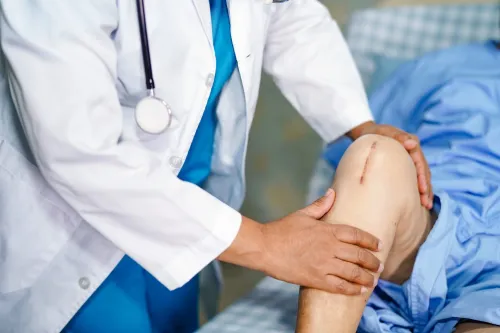
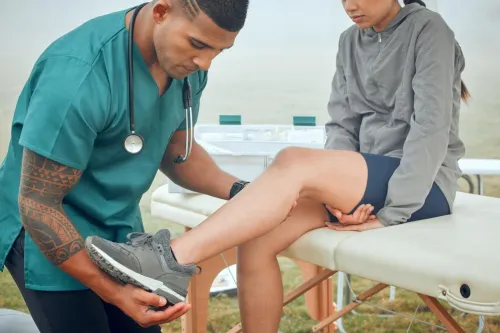
A sudden change in direction during sport, an awkward landing, or a forceful twisting injury can damage the anterior cruciate ligament of the knee. The ACL plays an important role in controlling knee stability, particularly during movements involving pivoting and rapid direction changes.
Understanding ACL Tear Treatment is especially important when the knee repeatedly feels unstable rather than simply painful. For active individuals and sports participants in Malad, Maharashtra, appropriate evaluation can help determine the extent of injury and the most suitable recovery pathway.
Why the ACL Matters
The ACL connects the thigh bone to the shin bone and contributes to controlling forward movement and rotation of the knee.
An ACL injury can range from a partial tear to a complete rupture. Some injuries also occur together with meniscus damage, cartilage injury, or injury to other knee ligaments.
Typical symptoms following an ACL injury may include:
- A popping sensation during injury
- Rapid knee swelling
- Pain during the initial phase
- Difficulty continuing physical activity
- Reduced range of motion
- A feeling that the knee gives way
- Instability during turning movements
Symptoms can change as swelling decreases. A person may eventually walk comfortably but still experience instability during demanding activities.
Does Every ACL Tear Require Surgery
No. ACL Tear Treatment should be individualized.
Some patients with partial tears, lower activity requirements, and good functional stability may be managed through structured rehabilitation. Physiotherapy typically focuses on restoring movement, strengthening muscles around the knee, improving balance, and developing neuromuscular control.
Surgical reconstruction may be considered when instability continues, the ACL is completely torn, the person wishes to return to pivoting sports, or associated injuries make surgical management more appropriate.
Age alone does not determine the decision. Activity goals, knee stability, occupation, associated damage, and overall joint condition are also relevant.
Why Repeated Instability Matters
One of the important problems associated with ACL deficiency is recurrent giving way.
When an unstable knee repeatedly shifts during activity, other structures inside the joint can be placed under additional stress. This is one reason patients should not judge recovery only by whether initial pain has disappeared.
A knee that feels normal during straightforward walking may behave differently during running, jumping, football, badminton, or movements involving rapid turns.
Assessment Guides the Treatment Plan
An orthopedic evaluation usually includes a detailed history of how the injury occurred, examination of knee stability, assessment of swelling and movement, and review of imaging when required.
MRI can help identify the ACL injury and detect associated meniscus, cartilage, or ligament damage.
This information is used to determine whether rehabilitation alone is reasonable or whether reconstruction should be discussed.
Rehabilitation Remains Important
Whether treatment is surgical or non-surgical, rehabilitation has a major role.
Before surgery, selected patients may need to reduce swelling and restore knee movement. After reconstruction, rehabilitation progresses gradually through different stages.
The program may include:
- Swelling management
- Restoration of knee extension and flexion
- Progressive muscle strengthening
- Balance training
- Functional movement exercises
- Sport-specific rehabilitation when appropriate
Returning to sport should not be based solely on the number of months since injury. Strength, movement quality, stability, confidence, and functional testing can all influence readiness.
Dr. Gaurav Gupta assesses ligament injuries with attention to the patient's functional needs and the associated structures affected by the injury.
For patients in Malad considering ACL Tear Treatment, early assessment is useful when the knee remains unstable, repeatedly gives way, or prevents a safe return to normal activities. The goal is to restore dependable function while choosing a treatment strategy suited to the individual knee.
Keywords