Neck stiffness that settles and then returns is not automatically a slipped disc or a reason to request an MRI. By tracking the pattern, recognising nerve and spinal-cord warning signs, and understanding what an examination and each treatment option can establish, you can decide when home care is reasonable and when assessment is the safer next step.
Key takeaways
- Arrange an assessment when stiffness returns twice in several weeks.
- Record episode dates, duration, triggers, symptoms, and effects on sleep or movement.
- Seek prompt medical advice for weakness, numbness, balance problems, fever, or severe headache.
- Compare exercise, medication, and other options before considering an invasive treatment.
What counts as recurring neck stiffness, and what should you record?
A recurring neck stiffness definition is symptoms that ease or resolve and then return, rather than one uninterrupted flare. There is no universal episode count, but arrange an assessment when stiffness returns twice or more over several weeks, lasts beyond a few days, becomes more frequent, or limits sleep, work, driving, or movement.
A single flare after unusual exercise or an awkward night’s sleep is less concerning when it steadily improves.
Keep a symptom diary for at least two to four weeks. Record:
- The date symptoms began, the episode duration, and whether your neck fully loosened between episodes.
- Pain location, severity from 0 to 10, and pain triggers such as desk work, phone use, lifting, exercise, or turning your head.
- Sleeping position, pillow changes, recent illness, stress, and any injury or whiplash.
- Headaches, pain into the shoulder or arm, tingling, numbness, hand weakness, clumsiness, or walking changes.
| Pattern | More consistent with | Record or seek help |
|---|---|---|
| One brief episode after strain, improving daily | Muscle flare or posture-related tension | Activity, pain triggers, and recovery time |
| Repeated episodes with complete relief between them | A recurring mechanical pattern needing assessment | Episode duration, frequency, and what provokes it |
| Stiffness with arm weakness, numbness, poor hand coordination, walking trouble, fever, severe headache, or major trauma | Possible nerve, spinal-cord, infection, or injury problem | Seek urgent medical evaluation rather than waiting for the diary to accumulate entries |
Which symptoms point beyond ordinary muscle tension?
Posture-related muscle tension usually improves with movement, heat, rest, or changing your desk or sleeping position. Symptoms that spread, progress, follow an injury, or come with systemic illness need a different assessment.
| Pattern | Clues | What it may suggest |
|---|---|---|
| Muscle tension | Dull tightness across the neck or upper shoulders; no numbness or weakness; linked to screens, stress, or sleep position | Posture-related stiffness |
| Nerve-root pain | Sharp or burning pain travelling into one arm, with tingling, numbness, reduced reflexes, or weakness; neck movement may reproduce it | Cervical radiculopathy |
| Spinal-cord signs | Hand clumsiness, dropping objects, hyperreflexia, balance trouble, stiff or weak legs, or difficulty walking | Cervical myelopathy |
| Joint pain | Pain stays near one side of the neck, worsens with extension or rotation, and may refer to the shoulder blade without neurological loss | Facet-joint pain |
| Other source | Shoulder pain worsens when you raise or rotate the arm; upper-back pain changes with shoulder-blade or thoracic movement | Shoulder or upper-back disorder |
| Injury or inflammation | Symptoms follow whiplash or a fall, or include fever, marked morning stiffness, swollen joints, night pain, or unexplained weight loss | Trauma, infection, or inflammatory disease |
Seek urgent medical evaluation for new or worsening arm or leg weakness, loss of hand coordination, trouble walking, bowel or bladder changes, or progressive numbness. Go urgently after significant trauma, or for neck stiffness with fever, severe headache, or confusion. Do not rely on prolonged self-treatment when neurological signs are advancing.
What happens at an assessment, and when is imaging useful?
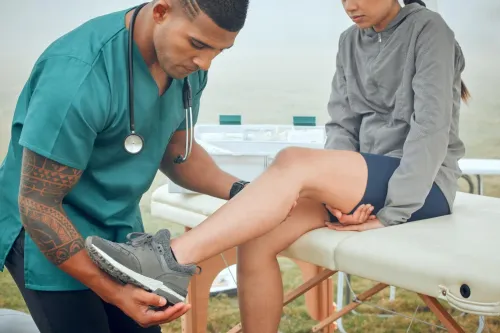
A clinician begins with a neck examination: posture, tenderness, muscle spasm, and active range of motion. They check shoulder movement and combine strength and reflexes with sensation, hand coordination, walking, and signs of nerve-root irritation such as the Spurling test or upper-limb tension test.
Progressive weakness, clumsy hands, abnormal reflexes, or walking difficulty needs prompt specialist assessment.
They may also ask:
- Whether symptoms follow an arm, occur after trauma, or worsen with coughing or straining
- How desk work, sleep position, and movement affect the stiffness
- Whether an exercise-based rehabilitation plan is appropriate before pursuing scans or passive treatment
Recurring stiffness alone does not prove a disc tear or justify an MRI. Degenerative changes are common without pain, so imaging helps only when its result could change treatment.
| Test | What it shows | When it can change treatment |
|---|---|---|
| Cervical spine X-ray | Alignment, fracture, vertebral height, and bony arthritis; it does not show nerves clearly | Suspected structural or traumatic bone injury, deformity, or persistent mechanical symptoms |
| MRI | Discs, nerve roots, spinal cord, inflammation, and soft tissues | Objective or worsening neurologic deficits, red flags, or arm symptoms that persist despite conservative care |
| CT | Detailed bone anatomy and small fractures, with more radiation than X-ray | High-risk trauma, an unclear X-ray, or surgical planning when bone detail matters |
After significant trauma, clinicians use the Canadian C-Spine Rule or NEXUS criteria to decide whether imaging is needed; do not use stiffness alone to dismiss an injury.
How should you compare neck stiffness treatments before choosing an invasive option?
Choose the least invasive treatment that addresses the suspected source, then judge it by expected benefit, effort, risk, and a clear stopping point.
| Option | Purpose and effort | Risks and limits |
|---|---|---|
| Self-care | Activity modification, gentle movement, and heat or cold reduce irritation; requires daily consistency. | Bed rest and prolonged soft-collar use cause deconditioning. Stop and seek review if symptoms worsen or weakness appears. |
| Medication | Paracetamol can ease pain; follow the label, avoid duplicate combination products, and check safety with liver disease or heavy alcohol use. NSAIDs can reduce inflammation but need caution with ulcers, kidney disease, blood thinners, and pregnancy. | These treat symptoms, not the cause; stomach, kidney, liver, and cardiovascular harms can result from misuse. |
| Physiotherapy | Exercises restore neck and upper-back strength, mobility, and control; expect several sessions plus home practice. | Progress can be gradual, and incorrect exercises can aggravate symptoms. |
| Ergonomic changes | Adjust screen height, chair support, phone use, and break intervals to reduce repeated strain. | They prevent triggers but cannot correct nerve or spinal-cord compression. |
| Traction | Gentle supervised traction may temporarily reduce selected radiating pain. | It is not a routine cure for stiffness; dizziness, increased pain, or nerve symptoms require stopping. |
| Injections | A cervical epidural steroid injection may provide short-term relief for confirmed radicular pain. | Dural puncture, infection, bleeding, nerve injury, and rare catastrophic neurologic complications make technique and indication important. |
| Surgery | Fusion or disk replacement addresses structural compression, not ordinary stiffness. | Outcomes are less predictable for isolated axial pain; consider it after nonoperative evaluation, or sooner for progressive neurologic deficit or spinal-cord signs. |
What should you ask before booking treatment for recurring symptoms?
Before booking treatment, ask how the evaluation will identify the pain source rather than assuming a disc problem or arthritis. An orthopedic evaluation should match your symptom pattern with neck movement, strength, reflexes, sensation, and shoulder examination.
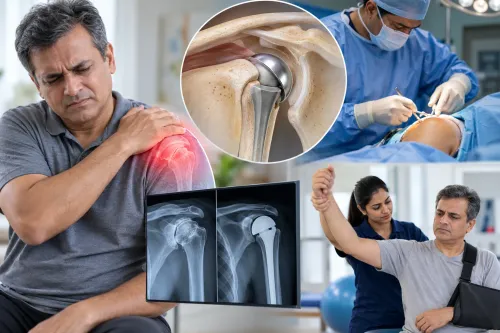
Shoulder arthritis or a frozen shoulder can restrict movement and refer pain toward the neck, so treating the neck alone could miss the cause.
Use these treatment questions:
- “Which examination finding explains my symptoms, and what alternative sources have you ruled out?”
- “Could this be nerve-root or spinal-cord involvement, and do I have objective weakness, altered reflexes, numbness, hand clumsiness, or walking changes?”
- “Would an X-ray or MRI change treatment now, or could an incidental disc bulge distract from the actual cause?”
- “What is the first treatment stage, how long will we try it, and what improvement should I expect?”
- “When should we review progress, and which specific result means the plan is working?”
- “What requires earlier contact or urgent assessment, such as worsening weakness, new coordination problems, walking difficulty, or bowel or bladder changes?”
- “If symptoms persist, what is the next step, and why would an injection or surgery offer more benefit than continued nonoperative care?”
If you consult Dr Gaurav Gupta, bring your symptom diary and ask for the suspected pain generator, the first-stage goal, the follow-up date, and the exact escalation threshold in writing. Surgery deserves particular caution when stiffness is the only complaint; imaging abnormality or pain severity alone does not establish a surgical indication.
Related service
Neck Pain Treatment Dr. Gaurav Gupta offers advanced and personalized treatment for neck pain caused by muscle strain, cervical spondylosis, slip disc, or poor posture. View service → |
Frequently asked questions
What counts as recurring neck stiffness?
Recurring neck stiffness returns after easing or resolving. Arrange an assessment when it returns twice or more over several weeks, lasts beyond a few days, becomes more frequent, or limits sleep, work, driving, or movement.
Which symptoms suggest neck stiffness is more than muscle tension?
Weakness, numbness or tingling in an arm, balance problems, fever, severe headache, or symptoms after an injury point beyond ordinary muscle tension and require medical assessment.
When is imaging useful for recurring neck stiffness?
An assessment determines whether imaging is useful. Your clinician considers the examination, symptom pattern, injury history, duration, and signs of nerve or spinal cord involvement before requesting a scan.
How should you compare treatments before choosing an invasive option?
Compare the expected benefit, risks, recovery time, alternatives, and evidence for each option. Ask whether exercise, activity changes, medication, or supervised rehabilitation should come first.
What should you ask before booking treatment for recurring neck stiffness?
Ask what is causing the symptoms, what the examination shows, whether imaging is needed, which non-invasive options are appropriate, what treatment involves, and when to seek urgent help.