Shoulder arthritis can gradually turn routine movements into uncomfortable tasks. Reaching overhead, putting on clothes, carrying objects, or sleeping on the affected side may become increasingly difficult. Effective Shoulder Arthritis Treatment therefore focuses not only on pain but also on preserving useful movement and function.
For patients in Malad, Maharashtra, treatment is usually planned according to the severity of joint damage, symptoms, activity requirements, and response to conservative care.
Why Shoulder Arthritis Causes Stiffness
Healthy joint surfaces are covered with cartilage that allows smooth movement.
When cartilage deteriorates, movement can become painful and restricted. Some patients experience grinding or catching sensations as the condition progresses.
Shoulder arthritis can develop for different reasons. Age-related osteoarthritis is common, but previous injuries, inflammatory disease, instability, or other joint problems can also contribute.
Identifying the cause helps guide management.
Early Management Often Focuses on Function
In earlier stages, Shoulder Arthritis Treatment commonly begins without surgery.
Depending on the patient's condition, management may include activity modification, appropriate medication, physiotherapy, and exercises designed to maintain useful mobility.
Patients often benefit from identifying movements that repeatedly aggravate symptoms and adjusting activities without becoming completely inactive.
Excessive avoidance of movement can contribute to stiffness and muscle weakness.
When Conservative Measures Become Less Effective
Arthritis can progress despite appropriate care.
A patient may notice that pain occurs with increasingly simple movements, sleep becomes regularly disturbed, or shoulder stiffness makes personal care difficult.
At this stage, reassessment can help determine whether the condition has changed.
Updated imaging may be appropriate if symptoms have significantly progressed.
The presence of arthritis on an X-ray alone does not mean surgery is necessary. The relationship between structural damage and real-life disability is important.
Surgical Options Depend on Shoulder Structure
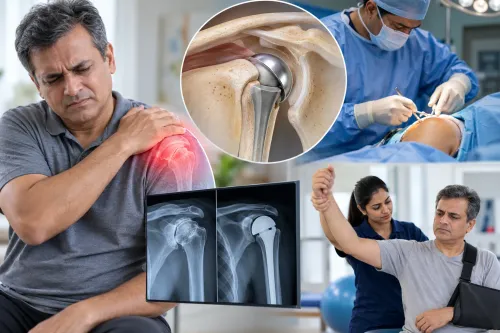
When severe arthritis continues to affect quality of life despite conservative treatment, surgical options may be discussed.
The appropriate procedure depends on several factors, including:
- Joint surface damage
- Bone quality
- Rotator cuff condition
- Shoulder stability
- Previous surgery
- Age
- Functional requirements
Different replacement designs are available because shoulder arthritis does not affect every patient in the same way.
This is why choosing surgery based simply on another patient's experience can be misleading.
Questions That Improve Treatment Decisions
Patients evaluating treatment can ask several practical questions.
How advanced is arthritis? Which structures are damaged? Is the rotator cuff functioning normally? Are additional conservative options reasonable? What improvement can surgery realistically provide? What will rehabilitation involve?
Clear answers help patients compare the benefits and limitations of each approach.
Dr. Gaurav Gupta evaluates shoulder arthritis using symptoms, physical examination, imaging findings, and the degree to which the condition affects everyday function.
For people in Malad seeking Shoulder Arthritis Treatment, a staged approach is often appropriate. Mild symptoms may be manageable through non-surgical strategies, while severe structural damage accompanied by substantial functional limitation may justify consideration of surgical treatment. Matching treatment intensity to the actual stage of disease helps avoid both unnecessary intervention and prolonged disability.
Keywords