A meniscus tear does not have one standard treatment. Some tears may settle with rehabilitation, while others produce persistent catching, locking, swelling, or activity-related pain. The location, pattern, size, and cause of the tear can all influence Meniscus Tear Treatment.
For patients in Malad, Maharashtra, understanding these differences can make it easier to evaluate treatment recommendations rather than assuming every meniscus injury requires surgery.
Understanding the Meniscus
Each knee contains two menisci. These crescent-shaped structures help distribute load across the knee and contribute to joint stability.
Meniscus tears can occur suddenly during twisting injuries or develop gradually as the tissue changes over time.
Younger active individuals may sustain traumatic tears during sport. In older adults, degenerative tears can develop with relatively minor movements and may coexist with osteoarthritis.
These two situations often require different treatment considerations.
Symptoms Can Vary
A meniscus tear may cause:
- Pain along the joint line
- Swelling after activity
- Pain during deep bending
- Difficulty twisting on the affected leg
- Catching sensations
- Reduced knee movement
- Mechanical locking
However, finding a tear on MRI does not automatically prove that it is responsible for every symptom.
Clinical examination remains important because degenerative meniscus changes can sometimes appear on imaging even when they are not the main source of pain.
When Conservative Treatment Makes Sense
Non-surgical Meniscus Tear Treatment may be appropriate when symptoms are manageable, the knee is not mechanically locked, and the tear does not have features that clearly require operative management.
Treatment may involve modifying aggravating activities, controlling pain and swelling, and completing physiotherapy.
Rehabilitation typically works on knee mobility, quadriceps strength, hip strength, balance, and movement control.
Many patients can improve without undergoing an operation, particularly when symptoms arise from degenerative changes rather than an unstable traumatic tear.
When Arthroscopic Management May Be Considered
Surgical treatment may be discussed for selected patients with persistent mechanical symptoms, certain traumatic tears, repairable injuries, or symptoms that remain troublesome despite appropriate conservative care.
When possible, preserving healthy meniscus tissue is generally important because the meniscus contributes to load distribution within the knee.
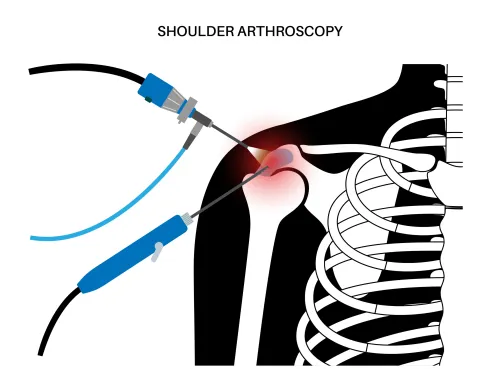
Depending on the tear, arthroscopic treatment may involve repair of the meniscus or treatment of unstable damaged tissue.
The appropriate approach depends on factors such as tear location, blood supply, tissue quality, patient age, activity level, associated ligament injury, and overall knee condition.
Repair Requires Patience During Recovery
Recovery after meniscus treatment depends on what has been done.
After some procedures, weight bearing and movement may progress relatively quickly. A repaired meniscus may require greater protection because the tissue needs time to heal.
Patients should therefore avoid comparing their rehabilitation timeline with another person's knee surgery.
Dr. Gaurav Gupta evaluates meniscus injuries by considering symptoms alongside examination findings and imaging rather than relying on an MRI report in isolation.
For patients in Malad considering Meniscus Tear Treatment, the most useful approach is to identify whether the tear is traumatic or degenerative, whether it is stable, and whether it is actually responsible for the current symptoms. Those details help determine whether rehabilitation, observation, or arthroscopic treatment offers the more appropriate pathway.
Keywords