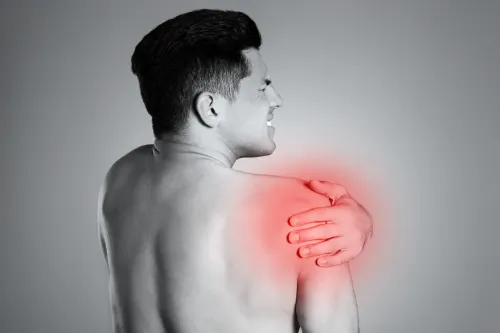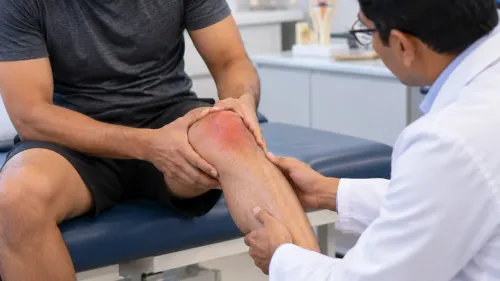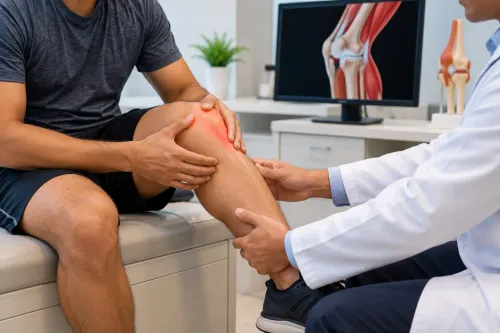
Persistent swelling, restricted movement, night pain, or pain that limits walking and sleep does not automatically mean an injection is appropriate. The decision depends on identifying the pain source, ruling out infection and structural injury, and weighing a time-limited benefit against safer or more durable treatments.
Key takeaways
- Confirm whether pain comes from the joint, bursa, or tendon tissue.
- Rule out infection before injecting a warm, swollen, or painful joint.
- Compare injection benefits with physiotherapy, medicines, and other treatments.
- Do not repeat injections when relief is brief or the diagnosis remains uncertain.
Which symptoms and diagnoses support considering an injection?
Persistent joint inflammation is more likely to justify assessment for corticosteroid injection when you have joint swelling, warmth without infection, tenderness, restricted movement, limping, or night pain and joint pain limiting walking or sleep. Examination should identify whether pain comes from the joint, a bursa, or tissue around a tendon.
Possible diagnoses include:
- Osteoarthritis with an inflammatory flare
- Bursitis causing local tenderness and pain with pressure
- Tendinitis involving a tendon sheath
- Rheumatoid arthritis
- Gout after the diagnosis is established
- Adhesive capsulitis, or frozen shoulder
| Diagnosis | Injection may be considered for | Treatment should go elsewhere |
|---|---|---|
| Osteoarthritis | Inflamed joint with painful movement | Fracture or advanced structural damage |
| Bursitis | Inflamed fluid-filled bursa | Infection near the bursa |
| Tendon-sheath inflammation | Inflamed sheath around the tendon | Tendon rupture |
| Rheumatoid arthritis or gout | Confirmed inflammatory disease | An unexplained hot, swollen joint |
| Adhesive capsulitis | Painful, restricted shoulder movement | Nerve compression causing referred pain |
The site changes the procedure: a joint injection, bursal injection, and tendon-sheath injection are not interchangeable. Corticosteroid should not be injected into a tendon, including the Achilles tendon, because it can weaken the tissue and increase rupture risk.
An injection cannot repair a fracture, torn tendon, torn ligament, or compressed nerve; using one first can delay necessary care.
How is the pain source confirmed before an injection?
Pain source diagnosis before injection begins with deciding whether the pain comes from the joint, nearby soft tissue, the spine, or another joint. A steroid injection should not mask an undiagnosed hot, swollen, acutely painful joint.
1. Take a focused history. Record when symptoms began, any injury, fever, morning stiffness, previous gout attacks, inflammatory arthritis, medication use, and the exact movement that provokes pain.
2. Examine the area. Check swelling, warmth, tenderness, stability, range of motion, tendon strength, sensation, and signs that pain is referred from the spine or another joint.
3. Choose imaging for the suspected structure. An X-ray can show osteoarthritis, fracture, or advanced joint damage. Ultrasound can identify fluid, bursitis, and tendon problems while helping guide needle placement. MRI can assess cartilage, meniscus, labrum, tendon, ligament, or an occult fracture.
4. Order blood tests when infection or inflammatory disease is suspected. A complete blood count, C-reactive protein, erythrocyte sedimentation rate, uric acid, or rheumatoid markers can add evidence, but no single result confirms the pain source.
5. Investigate unexplained heat and swelling before injecting. Joint-fluid analysis before steroid injection may require aspiration, synovial-fluid cell count, Gram stain, culture, and crystal analysis. Injecting septic arthritis can worsen infection and delay diagnosis.
Do not inject until risks are reviewed if there is infection near the site, an unhealed fracture, uncontrolled diabetes, a bleeding disorder, or blood-thinner use. Dr Gaurav Gupta can help distinguish these findings during an orthopedic assessment before treatment is chosen.
Related services
Steroid Injection Treatment Steroid Injection Treatment is an effective, minimally invasive procedure used to reduce pain and inflammation in joints, muscles, and soft tissues. View service → |
Joint Injection Treatment Joint injection treatment is a minimally invasive procedure used to relieve pain, reduce inflammation, and improve mobility in affected joints. Dr. View service → |
How should an injection be weighed against other treatments?
A corticosteroid injection is best weighed against the treatment that addresses the confirmed cause, not chosen because it is available. Physiotherapy, strengthening, range-of-motion work, weight management when relevant, activity modification, and ergonomic changes improve movement and reduce load. Consider an injection when pain prevents you from participating in rehabilitation.
| Option | Main benefit | Important limitation |
|---|---|---|
| Physiotherapy and exercise | Builds strength, movement, and function | Requires regular participation |
| Oral anti-inflammatory medicines | Reduces pain and inflammation | Review kidney disease, stomach-ulcer risk, blood pressure, cardiovascular disease, and other medicines |
| Aspiration of joint fluid | Relieves pressure and supplies fluid for cell count, culture, or crystal testing | Removing fluid alone does not treat the underlying inflammation |
| Steroid injection | Short-term relief that may enable rehabilitation | Does not restore cartilage or repair torn tissue |
| PRP or hyaluronic acid | Separate injection options with different evidence and indications | Neither is automatically the right substitute when steroid is unsuitable |
| Surgery | Repairs or replaces severely damaged structures | Consider for fracture, tendon rupture, unstable ligament injury, severe structural damage, or end-stage joint disease |
For knee osteoarthritis, guidelines describe corticosteroids as a short-term relief option, while exercise and other non-drug care remain important. The decision is not a simple aspiration of joint fluid versus PRP versus hyaluronic acid versus surgery; it depends on diagnosis, severity, goals, and risk.
A clinician can help compare steroid injection versus physiotherapy when pain is blocking progress.
What happens during the procedure and in the first few days?
1. Before the steroid injection procedure, the clinician confirms that inflammation is the pain source, explains expected benefit and risks, reviews diabetes and blood-thinner management, and obtains consent. Consent and skin cleaning are completed before positioning the joint.
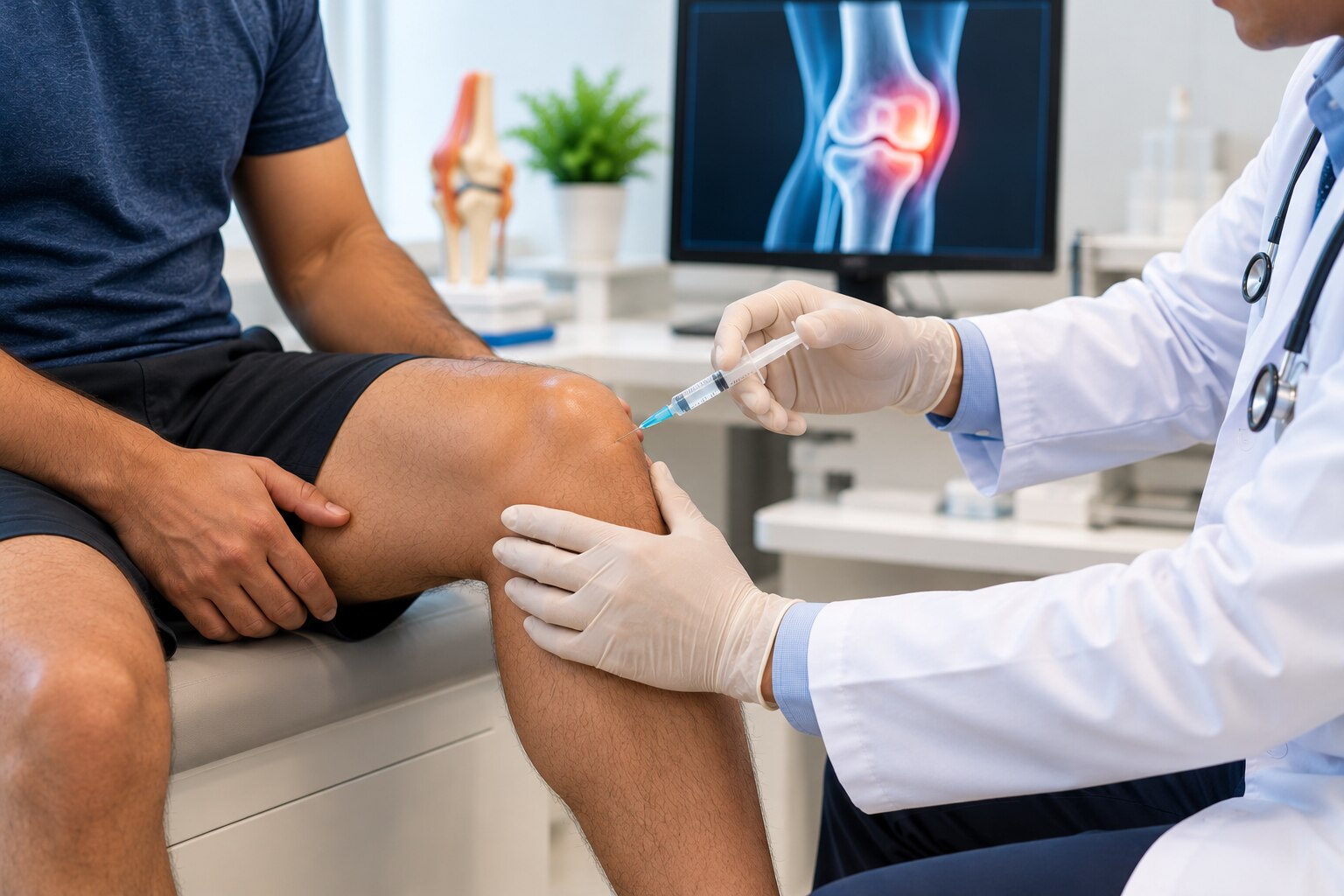
2. The skin is cleaned with an antiseptic. A local anaesthetic may numb the skin and needle track, but the injected medicine can still create pressure or brief discomfort. The needle enters the joint, bursa, or tendon sheath. An ultrasound-guided injection and aspiration is useful for deep or difficult-to-localise areas, including the hip.
3. If excess fluid is present, the clinician may aspirate it first and send a sample for synovial-fluid cell count, Gram stain, culture, and crystal analysis when infection or gout is possible. Do not inject an unexplained hot, swollen joint before infection has been assessed.
The injection itself is usually brief; preparation and observation take longer than needle placement.
4. Soreness or a temporary pain flare can occur during the first 24 to 48 hours. Apply an ice pack wrapped in cloth for short intervals, avoid strenuous loading initially, and follow instructions about walking, lifting, or driving. Resume prescribed physiotherapy or exercise when pain allows and the clinician confirms it is safe.
Fever, spreading redness, drainage, rapidly worsening pain, or inability to move the joint needs urgent medical review. These signs point beyond a normal post-injection flare.
How long can relief last, and when is repeating the injection a poor plan?
Relief is not always immediate. If local anaesthetic was used, it can wear off before the corticosteroid takes effect, so improvement often develops over several days. For knee osteoarthritis, NICE describes benefit as usually lasting 2 to 10 weeks; how long steroid injection relief lasts depends on the diagnosis, joint, severity, and activity.
1. Treat the result as temporary pain relief, not repair. A steroid injection reduces inflammation and symptoms; it does not restore worn cartilage, reunite a torn tendon, repair a ligament, or reverse advanced joint damage.
2. Do not schedule injections every few months by habit. In a two-year knee osteoarthritis trial, 40-mg triamcinolone every three months caused greater MRI-measured cartilage loss from repeated injections than saline, without better overall pain outcomes.
3. Account for risks before repeating treatment. Steroids can temporarily raise blood glucose, weaken tissue near tendons, and increase infection risk when given within three months before joint-replacement surgery. Tell the surgeon the exact injection date.
4. Reassess brief or absent relief, or swelling that returns. Referred spine pain, fracture, crystal arthritis, inflammatory arthritis, infection, and tendon problems need different treatment. The next step may be rehabilitation, disease-specific treatment, imaging, aspiration, or surgery.
Frequently asked questions
Which symptoms and diagnoses support considering a steroid injection?
Joint swelling, warmth without infection, tenderness, restricted movement, limping, night pain, or pain that limits walking or sleep can support an assessment. The diagnosis must identify whether inflammation affects the joint, a bursa, or tissue around a tendon.
How is the pain source confirmed before an injection?
A clinician uses your history and physical examination to locate the pain and assess swelling, warmth, movement, strength, and tenderness. Imaging or other tests can help when the diagnosis is uncertain or infection needs to be excluded.
How should a steroid injection be weighed against other treatments?
Compare the likely duration of relief, risks, diagnosis, and treatment goal with options such as activity changes, physiotherapy, medicines, or surgery. An injection should support a broader treatment plan rather than replace rehabilitation when rehabilitation is needed.
What happens during the procedure and in the first few days?
The skin is cleaned, the clinician positions the needle at the affected area, and the corticosteroid is injected, sometimes with a local anaesthetic. The area may feel sore for a short time, and you should follow instructions about activity and monitor for increasing redness, heat, swelling, fever, or worsening pain.
How long can relief last, and when is repeating the injection a poor plan?
Relief varies with the diagnosis and the individual. Repeating an injection is a poor plan when relief lasts only briefly, symptoms keep returning without treating the cause, infection has not been excluded, or the diagnosis remains uncertain.