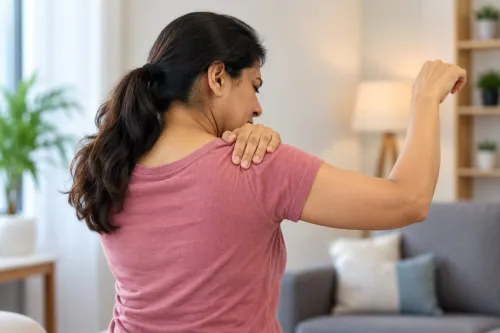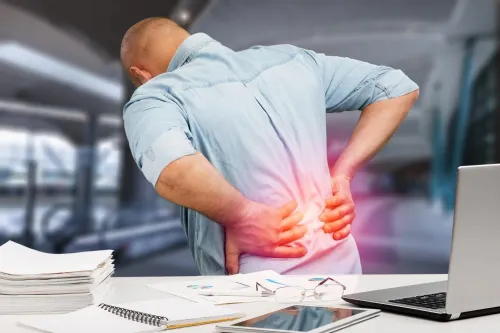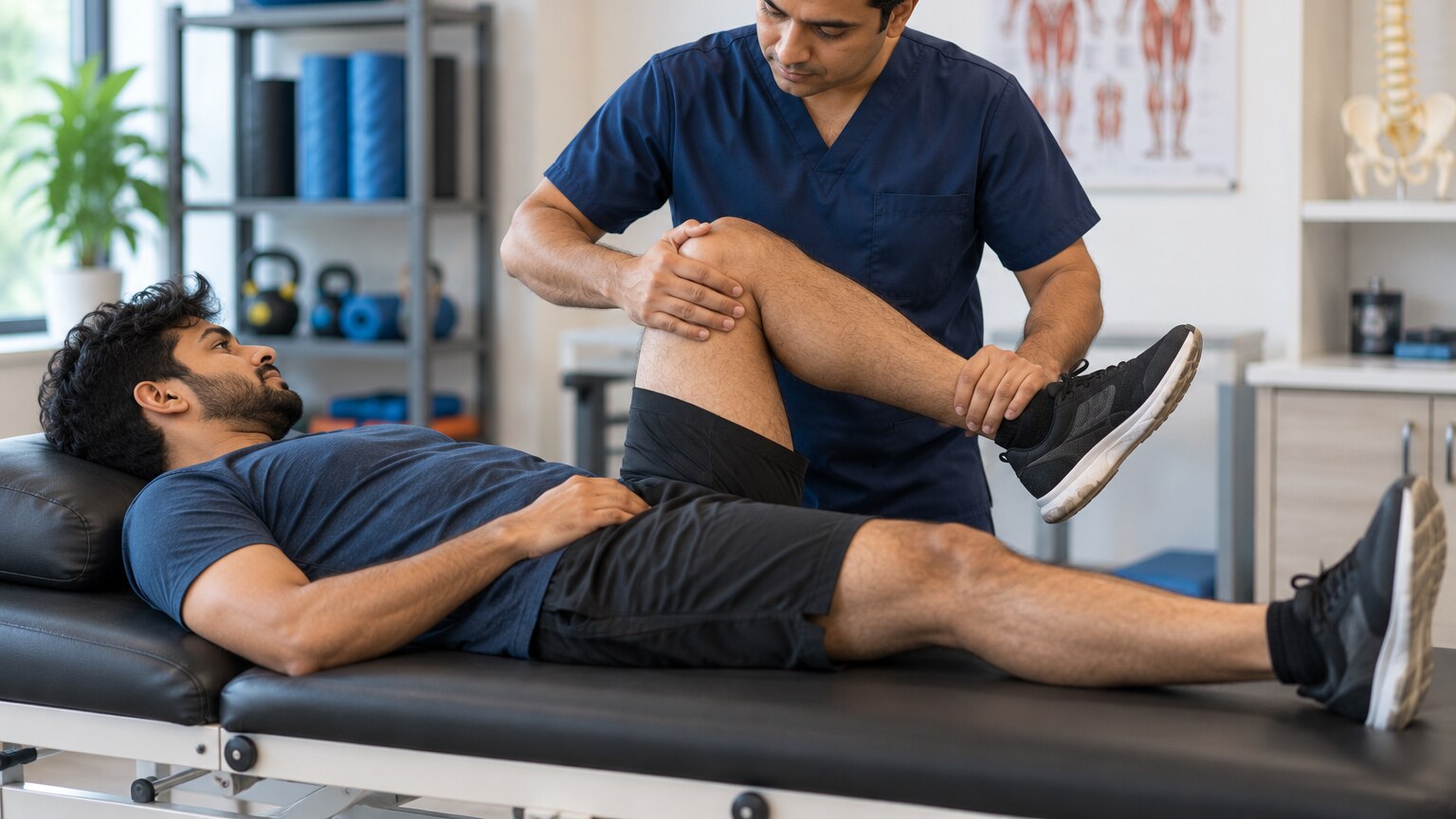
Pain relief is not the same as readiness to run, lift, pivot, jump or compete. By the end, you will know which symptoms, movement tests and sport-specific tasks support a safer return, how recovery stages differ by injury, and when a setback needs clinical review.
Key takeaways
- Stop activity and protect the injured area immediately.
- Seek care for severe pain, deformity, numbness, or inability to bear weight.
- Progress only when swelling, pain, movement, and strength meet your milestones.
- Rebuild load, speed, and sport skills gradually through rehabilitation.
What to Do in the First Hours—and Which Warning Signs Need Care
In the first hours, stop activity and protect the area from further impact or twisting. Use ice wrapped in a cloth for 15–20 minutes at a time, then remove it; add gentle compression and elevation (RICE) if swelling is developing.
Do not place ice directly on skin, tighten a bandage until fingers or toes become numb, or test the injury by returning to play.
Arrange prompt medical assessment if you have:
- Increasing swelling, severe pain, marked tenderness, or inability to bear weight
- A joint that gives way, locks, or cannot fully bend or straighten
- Visible deformity, suspected fracture, or a wound over a bone
- Numbness, tingling, weakness, pale or blue skin, or a cold hand or foot
- A head impact followed by confusion, worsening headache, repeated vomiting, seizure, unusual drowsiness, or loss of consciousness
| Finding | What it may indicate | What to do |
|---|---|---|
| Mild soreness that settles with rest | Minor irritation or strain | Protect it, use ice, and monitor symptoms |
| Persistent swelling or reduced movement | Injury needing examination | Stop exercise and book clinical assessment |
| Deformity or inability to bear weight | Fracture or major tissue injury | Seek urgent care; do not straighten it yourself |
| Concussion symptoms | Brain injury risk | No same-day sport; obtain medical clearance before a graduated return |
After concussion, each of the six return-to-sport steps requires at least 24 hours, and worsening symptoms mean stopping and stepping back for reassessment.
The Milestones That Show You Are Ready to Progress
Clinicians decide that you can progress by testing function, not by counting weeks. A safe return to exercise requires controlled symptoms, restored movement, adequate strength, and the ability to handle increasing loads without a flare-up during exercise or in the following 24 hours.
They look for these milestones:
- Pain and swelling remain settled during daily activity and rehabilitation.
- You have pain-free range of motion that matches the uninjured side or your normal baseline.
- A side-to-side strength comparison shows only a small, clinically acceptable deficit for the injured body part and sport.
- Balance and coordination tests are controlled without wobbling, compensation, or loss of joint position.
- You can squat, land, push, pull, hop, or change direction with sound movement quality.
- Sport-specific drills, performed at increasing speed and intensity, do not cause pain, swelling, giving-way, or altered technique.
Progress normally moves from protected daily activity to strength work, then jogging, faster running, jumping, cutting, practice, and competition. The next stage is earned by the previous one; a pain-free session does not justify a sudden increase in running distance, weight, or repetitions.
Your injury changes the standard. A healed fracture can still leave weakness or poor balance, and tolerable walking does not clear a stress fracture for impact. After concussion, medical clearance is required before contact-risk sport, with school or work tolerance assessed alongside the exercise progression.
If symptoms worsen within 24 hours, clinicians hold or reduce the load.
Why Recovery Timelines and Treatment Choices Differ
Two athletes can hurt the same knee and receive different restrictions because the damaged tissue, injury location, stability, blood supply, age, sport and examination findings change the risk. A scan helps identify the structure, but pain relief alone does not prove that tissue can tolerate sprinting, jumping or contact.
| Injury | What changes the plan | Why return takes a different path |
|---|---|---|
| Muscle strain | Examination and ultrasound or MRI when the diagnosis is unclear or severe | Muscle strain recovery depends on restoring strength without re-tearing during acceleration or stretching |
| Tendon or ligament injury | Ultrasound or MRI, plus tests of stability and resisted movement | A tendon injury can feel better before biological strength returns, so heavy loading, pivoting or contact may remain restricted |
| Fracture or stress fracture | X-rays, with MRI or other imaging when an early stress fracture is suspected | Fracture healing on an X-ray is not enough; stiffness, weakness, balance and altered gait also require rehabilitation |
| Meniscus tear | MRI findings must be matched with locking, swelling, age and degenerative changes | Meniscus tear rehabilitation may be safer than immediate arthroscopy for a degenerative tear, while a locked knee needs different assessment |
A stress fracture that no longer hurts during walking still may not tolerate running. An ACL reconstruction also requires landing, hopping, balance and sport-specific testing, not strength symmetry alone.
Dr Gaurav Gupta can help match imaging and treatment to the injured structure, especially when instability, locking or multiple damaged knee ligaments make a simple timetable unsafe.
Related services
Sports Injury Treatment Dr. Gaurav Gupta offers advanced diagnosis and treatment for sports-related injuries, including ligament tears, muscle strains, fractures, and joint... View service → |
Tendon Injury Treatment Tendon injuries can cause pain, swelling, and restricted movement, affecting daily activities. Dr. View service → |
How Rehabilitation Builds Back Load, Speed and Sport Skills
Progress by response, not by the calendar. Physiotherapy and home exercises should restore comfortable movement before you add resistance, impact or speed. Advance only when pain and swelling remain controlled during exercise and over the next 24 hours; a flare means hold the load or reduce it.
- Protect the injured area while maintaining the movement your clinician allows.
- Build strength with controlled resistance, then increase load progression in small steps rather than adding weight, repetitions and training time together.
- Add balance, landing and movement-quality drills before running and change of direction.
- Rehearse sport-specific skills at reduced speed, distance or resistance before full training.
- Return to competition when strength, coordination, range of motion and sport tasks match the demands of your sport without giving-way, locking or increasing swelling.
A repaired tendon, ligament or cartilage structure can feel normal before it has regained strength, so early motion does not authorise sprinting, pivoting or heavy resistance. After concussion, use six stages with at least 24 hours per stage: regular activities, light aerobic exercise, sport-specific exercise, noncontact training, full-contact practice after medical clearance, then competition.
Worsening symptoms require a step back and reassessment; school or work tolerance must recover alongside sport activity.
How to Prevent a Premature Return and Plan the Next Step
Pain-free walking does not prove that an injury is ready for impact, lifting or cutting. A healed fracture can still leave stiffness, weakness, poor balance or an altered gait, while stress-fracture pain can return when running resumes. Sleep loss, inadequate food, alcohol, smoking and rushing medication-free testing can also undermine recovery.
1. Match the test to the demand. For a return to work, check the actual tasks: standing, stairs, lifting, kneeling, driving or operating equipment. For a return to gym, restore controlled range of motion, strength, balance and technique before adding heavier loads or fatigue.
2. Treat warning signs as a stop signal. Increasing swelling, joint giving-way, locking, deformity, numbness, severe pain or inability to bear weight requires reassessment rather than another training session.
3. Use a staged progression: daily activity, strength work, jogging, change of direction, noncontact drills, full practice and competition. Increase one variable at a time and reduce the load if symptoms worsen within the session or the next day.
4. Respect injury-specific restrictions. After ACL reconstruction, testing should include hop performance, landing mechanics, balance, psychological readiness and sport drills—not strength symmetry alone. Delaying knee-pivoting sport until at least nine months has been linked with lower reinjury risk, but it is not a personal guarantee.
After concussion, complete six steps with at least 24 hours per step, obtain medical clearance before contact risk, and assess work or school tolerance separately. This is reinjury prevention, not lost time: a planned return to competitive sport protects the progress already made.
Frequently asked questions
What should you do in the first hours after a sports injury?
Stop activity, protect the area from impact or twisting, and use wrapped ice for 15–20 minutes. Add gentle compression and elevation if swelling develops.
Which warning signs mean a sports injury needs medical care?
Seek prompt assessment for severe pain, visible deformity, numbness, worsening swelling, or an inability to use the injured limb or bear weight.
How do you know when you are ready to progress exercise?
Use milestones for pain, swelling, movement, strength, balance, and sport-specific control rather than relying only on elapsed time.
Why do sports injury recovery timelines differ?
Recovery depends on the injured tissue, injury severity, treatment choice, previous injuries, general health, and the physical demands of your activity.
How does rehabilitation support a safe return to sport?
Rehabilitation progressively restores strength, load tolerance, speed, balance, movement control, and the skills required by your sport.
Related services
Ligament Injury Treatment Ligament injuries can cause pain, swelling, and joint instability if not treated properly. Dr. View service → |
Multi-Ligamentous Knee Injury Treatment Multi-Ligamentous Knee Injury Treatment A multi-ligamentous knee injury involves damage to two or more ligaments of the knee, often resulting from high-impact trauma or sports injuries. Dr. View service → |
Meniscus Tear Treatment A meniscus tear is a common knee injury that can cause pain, swelling, and limited mobility. At Dr. View service → |
PCL (Posterior Cruciate Ligament) Injury Treatment PCL (Posterior Cruciate Ligament) Injury Treatment Dr. Gaurav Gupta specializes in the diagnosis and management of Posterior Cruciate Ligament (PCL) injuries, which are less common but can... View service → |